
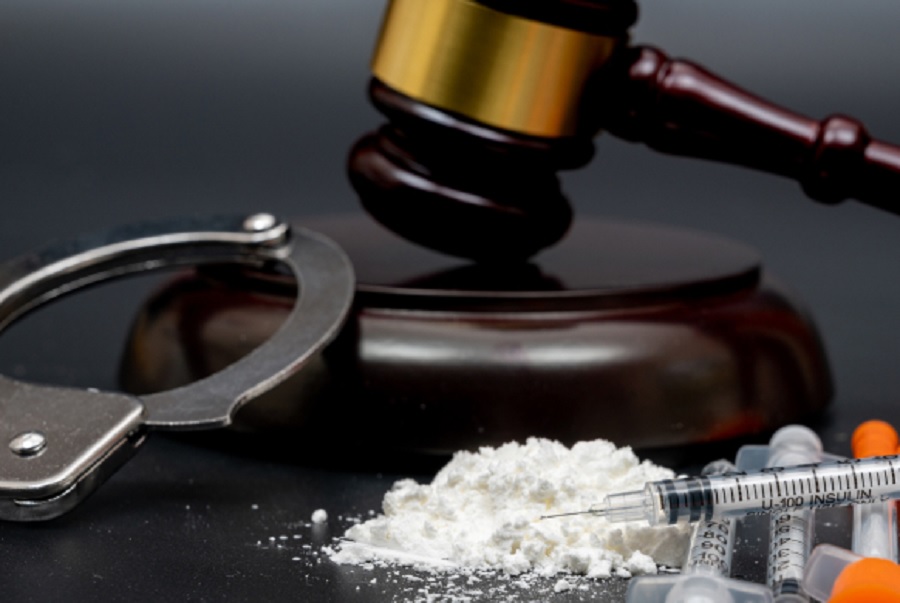
Drug-related charges carry serious legal consequences, including substantial fines, incarceration, and a lasting criminal record. Prosecutors often pursue these cases aggressively, relying on physical evidence, witness testimony, and forensic analysis to secure convictions. A skilled criminal lawyer must build a strategic defense, identifying weaknesses in the prosecution’s case while safeguarding the rights of the accused.
Defending against drug charges requires a comprehensive approach, from challenging evidence to negotiating reduced penalties. Below is a detailed exploration of the key defense strategies a criminal lawyer employs when handling drug-related cases.
1. Examining the Legality of the Search and Seizure
One of the most effective ways to challenge a drug-related charge is by scrutinizing the manner in which law enforcement obtained the evidence.
- Fourth Amendment Violations – The U.S. Constitution protects individuals from unlawful searches and seizures. If police officers conducted a search without a valid warrant or probable cause, a lawyer can file a motion to suppress the evidence.
- Unlawful Traffic Stops – In cases involving drug possession discovered during a traffic stop, a lawyer examines whether the officer had a legal reason to stop the vehicle in the first place. Any evidence obtained from an illegal stop can be challenged.
- Improper Search Procedures – If law enforcement officers exceeded the scope of their search authority—such as searching a home without proper justification—any drugs found may be deemed inadmissible.
By identifying constitutional violations, a lawyer can argue for the exclusion of critical evidence, weakening the prosecution’s case.
2. Challenging Possession and Ownership of Drugs
Prosecutors must prove that the accused had knowledge of and control over the drugs in question. A lawyer may argue that the defendant was unaware of the presence of illegal substances or that the drugs belonged to someone else.
- Constructive Possession Defense – If drugs are found in a shared space, such as a vehicle or residence occupied by multiple people, a lawyer can argue that the defendant had no direct control over them.
- Lack of Fingerprints or DNA – If law enforcement cannot provide forensic evidence linking the accused to the drugs, the prosecution’s case may weaken.
- Coerced or Inaccurate Statements – If a defendant was pressured into making an incriminating statement, a lawyer may challenge the validity of that statement.
A well-structured argument on possession can be crucial in cases where the prosecution relies solely on circumstantial evidence.
3. Questioning the Reliability of Drug Testing and Evidence Handling
Drug-related cases often depend on forensic testing to confirm the identity and quantity of the substances involved. However, laboratory errors and mishandling of evidence can lead to inaccurate results.
- Chain of Custody Issues – A lawyer investigates whether the drugs were properly handled from the time of seizure to laboratory analysis. Any gap in documentation or improper storage could cast doubt on the evidence.
- False Positive Drug Tests – Some field drug tests used by law enforcement are known to produce false positives. A lawyer may request independent testing to verify results.
- Misidentification of Substances – If a substance has not been conclusively identified as an illegal drug, a lawyer can challenge the basis of the charges.
A defense based on laboratory inconsistencies can be particularly effective in cases where the quantity or type of substance determines the severity of the charges.
4. Arguing for Unlawful Entrapment
In some cases, law enforcement officers may induce individuals to commit a drug-related offense that they otherwise would not have engaged in. This is known as entrapment, and it is a valid legal defense when properly demonstrated.
- Proving Government Inducement – A lawyer must show that the defendant was pressured, coerced, or manipulated into committing the crime.
- Lack of Predisposition – If the defendant had no prior intent to engage in drug activity but was encouraged by undercover officers, entrapment may be a viable defense.
- Challenging Informant Testimony – Some drug cases rely on confidential informants, whose credibility and motivations can be questioned.
By exposing entrapment tactics, a lawyer can argue that the charges should be dismissed.
5. Negotiating Alternative Sentencing Options
When dismissal or acquittal is not achievable, a lawyer may negotiate with prosecutors for alternative sentencing options that focus on rehabilitation rather than punishment.
- Drug Diversion Programs – Many jurisdictions offer first-time offenders the opportunity to participate in treatment programs in exchange for reduced or dismissed charges.
- Probation Instead of Jail Time – A lawyer may argue that supervised probation is more appropriate than incarceration, particularly if the defendant does not have a history of violent crime.
- Expungement Eligibility – In some cases, a lawyer can secure a resolution that allows the defendant to have their record sealed or expunged after completing certain conditions.
By advocating for alternative sentencing, a lawyer helps minimize the long-term impact of a drug-related conviction.
6. Preparing for Trial with a Strong Defense Strategy
If a case proceeds to trial, a criminal lawyer builds a strategic defense designed to create reasonable doubt in the minds of jurors.
- Cross-Examining Prosecution Witnesses – Law enforcement officers and forensic analysts may be questioned on inconsistencies or errors in their reports.
- Presenting Expert Testimony – A forensic expert can provide independent analysis of drug evidence, while a psychologist may testify on addiction-related factors.
- Highlighting Weaknesses in the Prosecution’s Case – A lawyer strategically emphasizes areas where the prosecution has failed to meet its burden of proof.
A strong trial strategy can result in an acquittal or a reduction in charges.
Protecting Clients Against Drug-Related Charges
A criminal lawyer defending drug-related cases must scrutinize every detail of the prosecution’s claims, from the legality of the search to the reliability of forensic testing. By challenging evidence, exposing procedural violations, and negotiating favorable alternatives, an experienced attorney ensures that clients receive a strong and well-crafted defense. The ultimate goal is not just to fight the charges but to protect the future and rights of the accused.